Dandelion
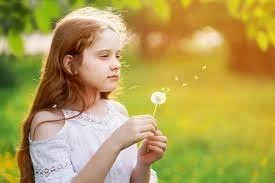
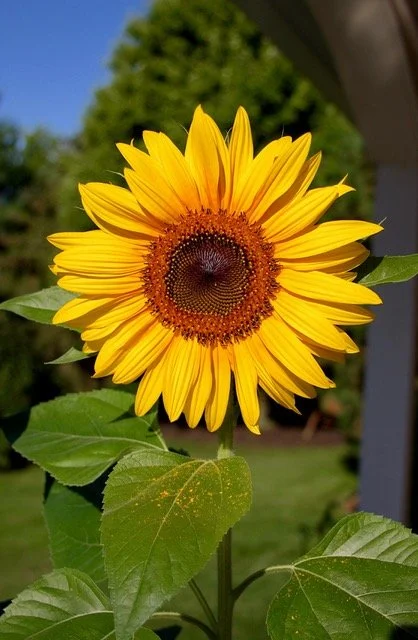
This summer I’m letting the dandelions in my yard run wild. There is something about their freedom that makes me feel free too. My neighbors probably think I’ve gone nuts, or become too sick to care for my yard or am just lazy. A dandelion, after all, in most circles, is considered a weed to be eradicated by poison or yanked out by its roots. But this plant, that civilized society finds offensive to a green lawn, is filled with healing properties and impressive powers. On a burning hot day the dandelion has figured out how to sustain itself by using its spatula like leaves to catch morning dew and funnel the water to its roots. It can grow through cracks in sidewalks and, like the crow, is found almost everywhere on the planet. Dolly Parton sings, “Wild flowers don’t care where they grow”. The Dandelion is hardy and knows how to survive. A trait well worth cultivating in this time of rapid change.
Read More
Early Summer
It’s early summer. The mornings are cool, heating up by noon. What is there to say? It’s a time of easy being best summed up by the great Haiku poets Basho, Buson and Issa:
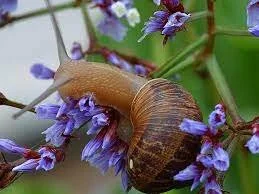
That snail
one long horn, one short,
what’s on his mind?
Buson
Read More
A Gardener
The Tibetan Lojong teaching number 42 says, “Whichever of the two occur, be patient.” I’m sitting in the middle of this glorious spring garden and the unimaginable grief of a family who lost their son and brother. It’s hard to reconcile how life can be so contrasting, how this beautiful world full of birds and flowers and children can also be filled with such profound loss, cruelty and horror. It’s something I may never understand.
Read More
Caring for caregivers
We all need caregivers at some point in our lives. As helpless babies we wouldn’t survive without caregivers. When we’re sick or dying, what a blessing it is to be held in the tender care of someone who touches us with warmth and love. It’s a special talent to know how to be with someone who is helpless and/or in pain, a soft talent, not something crowed about or lauded in art or even everyday life. It requires real compassion to stay present in the face of another’s pain. It requires spiritual maturity to turn towards the pain and human need instead of away from it. People with this talent are a blessing to those of us who are fortunate enough to be in their presence. We need to cultivate and take care of this precious resource.
Read More
Haiku
I’m sharing this to invite you to write your own “bad” haiku. The idea is to take pen in hand and let it fly. Being precious or exacting at the start of any art project is a killer. Let go of self-judgement or feelings of inadequacy. These poems are for your eyes only, tools to help you fully inhabit the moment. Here are some guidelines to get you started:
Read More
working on a world we may never see
In this time of great challenges coming at us each news cycle, I offer this wonderfully insightful poem by the Brazilian theologian Rubem Alves:
Read More
Lojong teachings
Lojong teachings are, at their core, designed to develop compassion. When we stop projecting our unhappiness onto others we are free to see them as they are. Then we can love them with all their mishigosha. Then we can love ourselves with all our mishigosha.
Read More
Walking into the Ocean
While sitting in the sand by the ocean a young mom with a toddler walked up and parked her stroller beside me. I watched as the mom diapered her child while standing up. I wanted to applaud her dexterity but thought that might freak her out so I just watched her and the other beach goers from a place of stillness and contentment on this beautiful day by the ocean. Her little boy toddled to the shore and put his feet into the vast rolling ocean. All the boy could see in front of him was the dark blue green ocean expanding to the blue sky, all he could hear was the roar of the waves and all he could feel was the warm, salty water. A less confident mother might have swooped him up from the ocean’s dangers and brought him safely to shore. This mother stood behind her boy, not in front of him. If he needed her she was there but she didn’t get in the way of his experiencing this limitless world.
Read More
Small Seeds
We’re all called to different tasks, different acts of loving kindness, different populations. One person is called to take a leadership role in climate change issues, one is feeding the hungry, another housing the homeless, another ending war. We each find our niche, our passion, in all the good work that needs to be done. How lovely to relax back into our calling and act fully with confidence that our efforts are important-even when we can’t see the results. When seeds are planted in the ground the farmer doesn’t stand over them to see if they will grow. She lets the seed go into the loamy soil knowing she’s done her part. Some of the seeds will be eaten by animals, some will die in the ground and some will grow to be lush beautiful plants. Some of the seeds will even endure and propagate throughout the land. This is none of her affair. She just plants the seeds and lets them go.
Read More
The Simple Practice of Gratitude
Short of meditation, this gratitude practice has been one of the most powerful tools I’ve found. For years I’ve been using it to get out of funks, victimhood (you want to spend as little time as possible in this hood), pits of sorrow. Like meditation, it’s not something you do for a while, get good at, and store on the shelf. It’s more like gas for the car. The mind is prone to negativity and needs to be set straight again and again. Best to refuel before it runs on empty. Making a gratitude list is like getting free gasoline whenever you want it-- Such a great deal!
Read More
Meditating with a Fuzzy brain
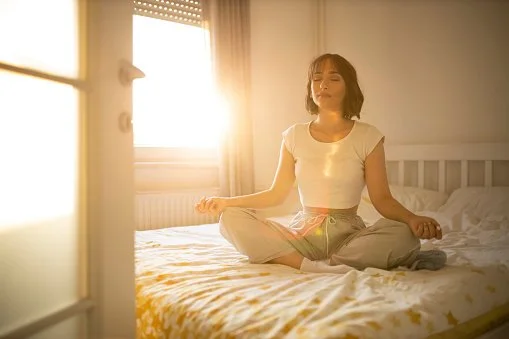
How fortunate that we who have a chronic condition need not be deprived of this brilliant tool the Buddha honed to perfection for us. The health benefits of this form of meditation are considerable. Health challenges such as long COVID play havoc with our nervous system. While meditating, our beleaguered nervous system has an opportunity to calm down. Obsessive thoughts and fears born of shifting body symptoms that arise, dissolve into the present moment instead of growing louder in the echo chamber of our consciousness. Anxiety becomes just another passing sensation. Since we don’t follow the anxiety blindly it slowly dissolves for lack of attention. We can finally rest. Body and mind settle down and the body begins to repair itself.
Read More
What a harvest!
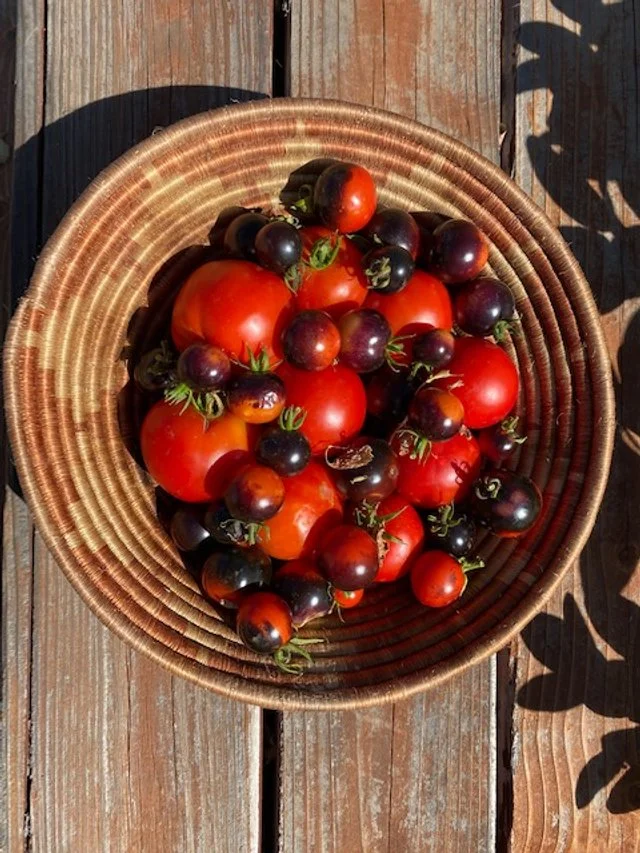
In the morning I go out to the backyard in my slippers and bathrobe with a mug of coffee to sit with my garden in the cool morning air. Any serious gardener would look at this one raised bed and four tubs of corn and squash and wonder at its meager offerings. Still, this modest harvest requires canning and drying and preserving in sterilized jars. This amount of responsibility is just about as much as I can handle. When the peaches come ripe I make peach jam. Now there is an abundance of tomatoes so I’m drying, canning, and preparing to give these juicy red fruits, plucked in their prime and packed in olive oil, to friends and neighbors come the holidays. Thinking about sharing this bounty on a cold winter day brings feelings of delight in this early morning summer garden. Come the holidays my friends will enjoy this summer garden with me in the form of pasta tossed in rosy red olive oil infused with dried tomatoes- real tomatoes not those mealy market ones- to brighten their winter repast.
Read More
As much joy as you can stand
When people hear that Buddhism speaks in great detail about suffering and impermanence and that our practice involves sitting in silence and just being with whatever arises they think Buddhism is dry and dusty. And there are some teachers who reflect a sense of dryness. Yet there are other teachers, such as the Dalai Lama, who radiate the radical glow lying beneath that dry exterior. He is someone who has had his country taken from him and seen his beloved county men and women tortured, killed and forced to flee with almost nothing to build a life a foreign land. Yet the Dalai Lama’s joy radiates unconditionally warming all in his presence. The Chinese powers that be cannot take away the Dalai Lama’s joy, and no one can take away your bedrock joy.
Read More
Chinese Finger Trap
When I was a little girl my older brother had a trick he liked to play on me. He’d put both my index fingers into a tight straw container called a Chinese finger trap and tell me to pull them out. The initial reaction to the finger trap is to panic and yank your fingers outward, which makes the trap tighter. The way to escape the trap is to relax and push the ends toward the middle, which enlarges the opening and frees the fingers. The harder I pulled the tighter the straw trap bound my hands together. The only way to get the thing off me was to relax and gently let it slip off, no mean feat, especially given the element of panic. It’s a cruel trick, but it did teach me something I keep learning over and over again in different forms. The harder I struggle the greater my suffering. The antidote is relaxing when I most want to tense up.
Read More
Stoking the fire
Whatever training we’re going to engage in, we must first have a strong motivation to continue the training through the many challenges we will encounter. The athlete may be motivated by a competition they want to win, a dancer may be motivated by a dream of joining a professional dance troupe. In order to circumvent resistance we need to take an honest look at the question, why do we meditate? The seductive call of the senses is strong. If we do not have a burning desire for awakening, or a desperate need to make it through challenging circumstances, it’s difficult to keep walking the path when we’d rather stay in bed or talk with a friend or just start our day.
Read More
TAKING REFUGE
I never thought about the connection between being a refugee and the Buddhist rite of taking refuge until recently. Watching Ukrainians flee from their homes, bringing with them only what they can physically carry, makes the idea of refuge much more immediate and real to me. In the morning the Ukrainian mother made her coffee, just the way she likes it, fed her family breakfast, bundled her kids up for school and got ready for the day. It’s the simplest things that make life feel safe. How quickly all of that can devolve into survival. How fragile we are.
Read More
CREATING BEAUTY OUT OF TRASH
There are books on how to cut and piece rags together to make quilts, we can see how other artists pick up stones at a creek, or discarded items at the dump to make sculpture, but how do we take something as abstract as a broken heart and transform it into compassion? Thankfully, we are not left on our own to figure this out. Explorers before us have developed practices that show us how to pick up and rearrange the pieces. One such practice is Lojong training, developed by the Bengali meditation master Atisha in the 11th century CE. This practice takes us through a series of 59 sayings designed to help us recycle uncomfortable and painful feelings into spiritual power.
Read More
Zen and hard times
Zen has valuable wisdom to offer us for hard times such as these. The first bit of wisdom is the bed rock practice of not knowing. The Zen teacher, Roshi Bernie Glassman, wrote, “Knowing is a snapshot, the idea of how things are; therefore, it’s not deep wisdom. The perfection of wisdom is the functioning of things as they are. We say, not knowing is most intimate. If we can really see this basic point of life, we can function with no limitations or restrictions; we can do everything!” While meditating we don’t judge or comment on our thoughts, we just watch them arise and pass. We focus on the vital field that the thoughts arise and pass in and out of. Resting in not knowing allows us the space to let go of tension and viewpoints if only for a few minutes. We feel the positive emotions alongside the challenges without judging either.
Read More
Dancing through the gates of hell
In line waiting for my cup of ayahuasca, the drums beating a rhythm, I sway to the music ready to enter into the unknown. At last evening’s ceremony I was filled with fear. I asked mother ayahuasca to be gentle with me and she was. My father danced with me the entire evening. Nobody loved dancing more than him. His visitation reminded me to express joy and playfulness through my body, that my body is an expression of delight. Tonight I was ready for ayahuasca to bring it on, open to experience whatever I needed to experience in order to open up any clogged channels of my psyche. I wanted to be free. With steely determination I was now ready to enter whatever gate led to release of core suffering.
Read More
Letting everything be as it is
In Zen intimate is another word for awakened. When we experience things directly, without added judgements and classifications, our knowing is as close as the pillow is to our head at night. We don’t lie in bed thinking, “This is my head and this is my pillow. My pillow is made of cotton. It’s from Bed Bath and Beyond.” We just sink into the experience of comfort and ease. Intimacy is experiencing everything directly, whether the sensation is pleasant or painful-no matter. We put aside those definitions and the sensation is just a sensation, the feeling is just a feeling, the thought is just a thought. We are not separate from our experience. From that place we can lay down fear and see the world around us more clearly.
Read More